
Inner Energy: Ways to Reconnect with Yourself and Your Values
Have you ever looked at your life and felt that something was missing, even though, from the outside, everything seemed to be going well?
Perhaps you have a good job, a family, and plenty of things to keep you busy. You’re doing your best to meet your responsibilities, but somewhere along the way, you’ve stopped asking yourself a simple question: Am I actually happy with the way I’m living?
Sometimes we get so caught up in what needs to be done, what other people expect from us, and what we think we should achieve that we lose touch with our own wishes.
Inner energy is connected to how well you understand yourself, what you value, and whether your everyday life reflects what truly matters to you. It’s about feeling comfortable with who you are, having a sense of direction, and making choices that feel right for you.
You don’t need to have your entire life figured out. But taking time to reconnect with yourself can help you understand what you want, recognise what may be missing, and decide what you’d like to change.
Here are five ways to develop a stronger connection with yourself and your values.
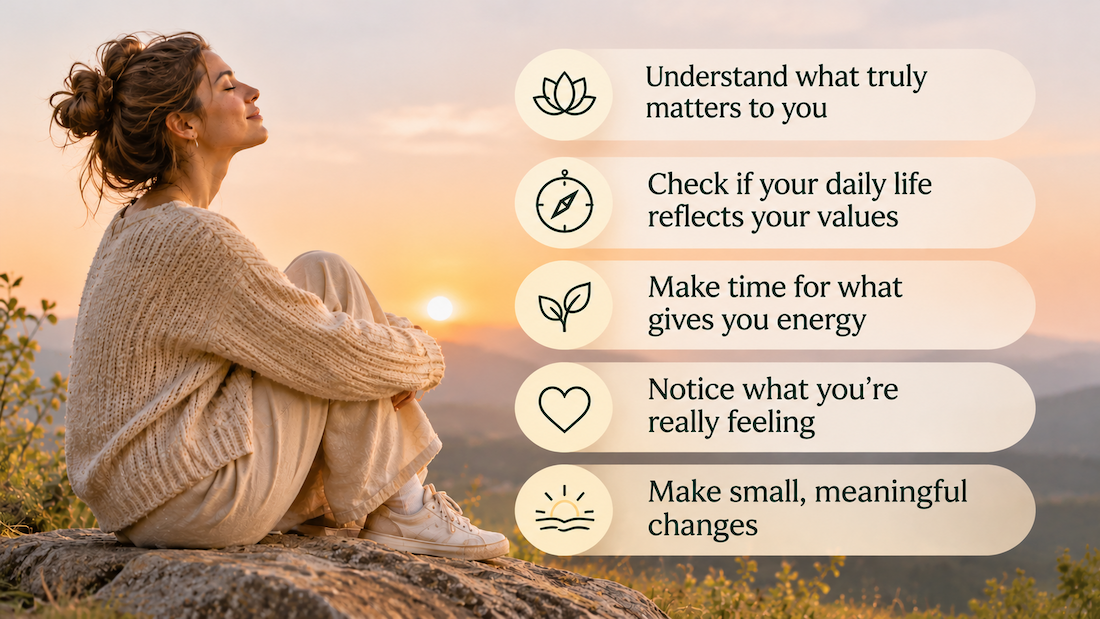
1. Rediscover What Really Matters to You
It’s easy to spend your days looking after everyone and everything else. Work needs your attention, family members need your support, and there are always plans to make and responsibilities to take care of.
But when was the last time you stopped and asked yourself what you actually want?
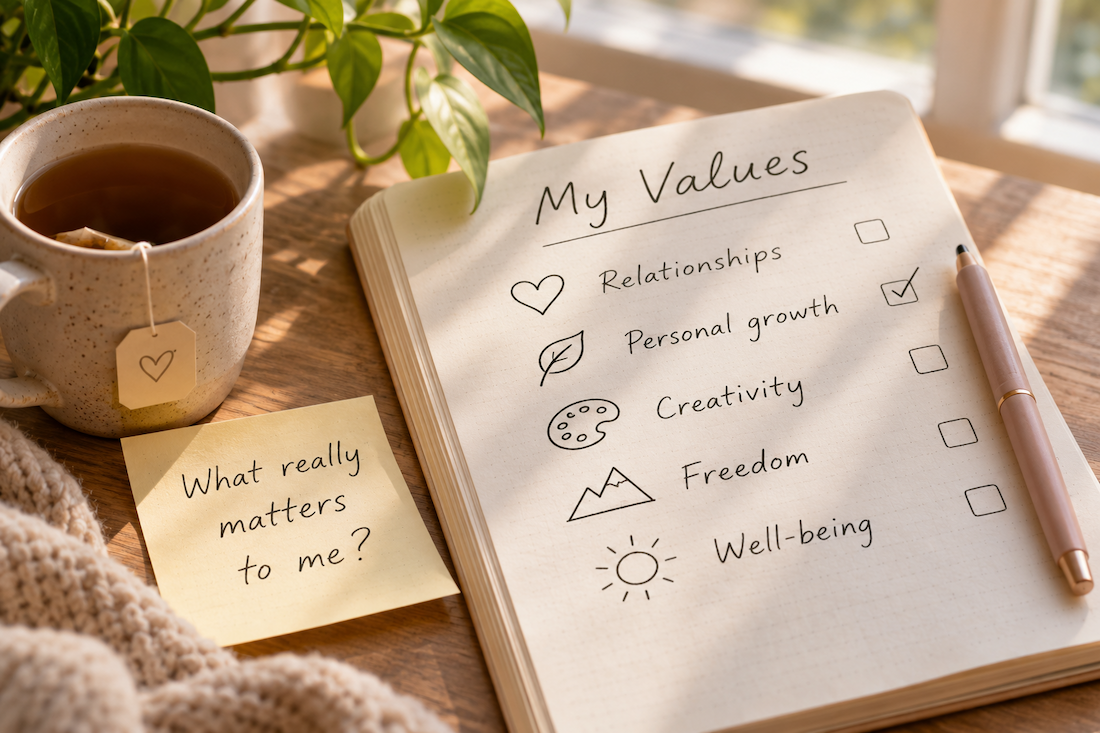
Your values are the things that matter most to you. They shape your priorities, influence your decisions, and help you understand what makes life feel meaningful.
For one person, it might be spending quality time with family. For another, it’s freedom, creativity, personal growth, meaningful work, or the opportunity to explore the world.
There are no right or wrong priorities. And they don’t have to stay the same throughout your life. What was important to you a few years ago might feel different today.
Try this self-reflection:
Take a quiet moment and think about these questions:
- What makes me feel genuinely happy and fulfilled?
- When do I feel most like myself?
- What would I like to have more of in my life?
- Which things matter to me but rarely get my attention?
- Am I making time for what I truly value?
You could also write down your three most important values and consider how they show up in your everyday life.
For example, if personal growth is important to you, are you making time to learn something new? If meaningful relationships matter, when was the last time you spent quality time with someone you care about?
Sometimes the things we value most are the very things we keep putting off.
2. Find a Better Balance Across Different Areas of Your Life
Have you ever been so focused on work that you barely had time for your relationships, hobbies, or yourself? Or perhaps you’ve been taking care of everyone else while your own interests have gradually moved to the bottom of the list.
It’s natural to give more attention to certain areas of life during different periods. Sometimes your career needs extra focus. At other times, family, relationships, or personal well-being become more important.
The difficulty begins when one area takes up almost all your attention and the others are consistently neglected.
A useful way to see what’s happening is the Wheel of Life – a simple self-reflection exercise that helps you assess how satisfied you feel with different areas of your life.
You can divide your wheel into areas such as:
- Health and well-being
- Family and relationships
- Career and self-realisation
- Finances
- Creativity and hobbies
- Personal growth
- Rest and leisure
Rate each area from 1 to 10, based on how satisfied you feel with it right now. Don’t overthink your scores. The purpose is to get an honest snapshot of your current situation.
Try this:
- Draw your own Wheel of Life and choose the areas that matter most to you.
- Give each area a score from 1 to 10.
- Notice which areas receive most of your attention and which ones feel neglected.
- Choose one area you’d like to give more attention to.
- Think of one small action you could take this week.
For example, if work is going well but your relationships have taken a back seat, you might decide to plan an evening together or make more time for meaningful conversations.
You don’t have to give every area exactly the same amount of attention. Balance isn’t about getting everything perfect. It’s about noticing when something important is missing and making room for it again.
You can repeat this exercise every few months, especially when your circumstances or priorities change.
3. Learn to Recognise Which Goals Are Really Yours
We are constantly exposed to other people’s lifestyles, achievements, and ideas about what a successful life should look like.
Social media can be a great source of inspiration. You might discover a new career path, become interested in a hobby, or realise that there are possibilities you had never considered before.
But it’s also easy to start comparing your life with someone else’s.
You see someone building a successful business, travelling the world, or changing careers, and suddenly your own life doesn’t seem quite as exciting. You start thinking that perhaps you should be doing the same thing.
Sometimes we adopt goals not because we genuinely want them, but because we’ve come to believe that we should.
This can be especially confusing when someone promises a quick transformation or presents a particular lifestyle as the key to happiness and success.
A goal can look attractive on the outside and still not be right for you.
Try this:
When you feel drawn to a new goal or start thinking about a major life change, pause and ask yourself:
- Did I want this before I saw someone else doing it?
- Am I interested in the actual process, or just the result?
- Would I still want this if nobody knew about it?
- Does it fit the kind of life I want to build?
- Am I choosing it out of genuine interest or fear of falling behind?
You don’t have to stop looking for inspiration or learning from other people. Just give yourself space to decide what you want to take from their experiences and what doesn’t belong in your own life.
You can admire someone else’s path without making it your own.

4. Make Time to Listen to Yourself
Sometimes the hardest part isn’t knowing that something needs to change. It’s understanding what you actually want instead.
You might spend hours analysing a situation, making lists of pros and cons, or asking friends for advice. Yet the more you think about it, the less certain you become.
When this happens, it can help to step away from all the outside opinions and give yourself a moment to listen to what’s going on inside.
Quiet reflection, journaling, and meditation can help you slow down and become more aware of your thoughts, feelings, and needs.
One simple exercise is called the “My Soul” practice. It invites you to pause, turn your attention inward, and ask your soul a simple question: What do you want right now?
Try the “My Soul” Practice:
- Pause for a few minutes, especially when you’re feeling overwhelmed, unsure what to do next, or facing a decision.
- Take a few slow breaths and allow yourself to become quieter.
- Close your eyes and place your hand on your chest, if that feels comfortable.
- Silently ask yourself: My soul, what do you want right now?
- Notice the first thought or feeling that comes to mind. Try not to analyse or judge it straight away.
The answer might be surprisingly simple.
Perhaps your soul is asking for a little rest, something to eat, a walk, or some time alone. Maybe you feel like listening to music, dancing, learning something new, or returning to an activity that brings you joy.
Sometimes the answer might be less obvious. You may realise that you’ve been putting aside something important to you or that you want to make a change but haven’t allowed yourself to acknowledge it.
Don’t dismiss the first response just because it seems small or unexpected. Take a moment to consider what it might be telling you.
You can practise this several times throughout the day, especially when changing activities or deciding what to do next. You don’t have to act on every impulse immediately. The purpose is to become more attentive to your own needs and desires rather than automatically following external expectations.
5. Respect Your Own Needs Without Feeling Guilty
Knowing what you want is one thing. Giving yourself permission to choose it is another.
Perhaps your family has made plans for the weekend, but you would rather have some time to yourself. A friend asks for help, but you’re already exhausted. Someone expects you to agree with their decision, even though you feel differently.
You might say yes because you don’t want to disappoint anyone. Later, you realise that you ignored what you wanted simply to keep everyone else happy.
This can become a habit, especially when you’re used to being the person who takes care of others.
But your needs matter too.
Choosing yourself doesn’t mean being selfish, ignoring other people’s feelings, or refusing to compromise. It means recognising that your preferences deserve a place in the conversation.
Try this:
Before agreeing to something, give yourself a moment to think:
- Do I genuinely want to do this?
- Am I saying yes because I feel guilty or pressured?
- How will this choice affect my time and energy?
- Could I suggest another option that works better for me?
For example, your family might invite you to spend the weekend together, but you already have other things you’d like to do. Instead of automatically agreeing or feeling guilty for saying no, you could explain what matters to you and suggest another time to meet.
Not everyone will always understand or agree with your choices. That’s part of life.
You can love your family, care about your partner, and be a supportive friend without automatically putting your own wishes aside.
Sometimes choosing yourself simply means being honest about what you need and finding a way to respect both your needs and the people around you.
Final Thoughts
Feeling connected to yourself doesn’t mean always knowing exactly what you want or having every area of your life under control.
It’s about staying curious about who you are, noticing when your priorities change, and giving yourself permission to make choices that reflect what matters to you.
You might discover that you need more time for yourself, a different balance between work and personal life, or the courage to let go of a goal that no longer feels right.
Start with small steps. Revisit your values, take an honest look at your life balance, and make a little space to listen to yourself.
You don’t have to follow someone else’s idea of a fulfilling life. You can take inspiration from others while creating a life that feels meaningful and genuinely your own.