
Angry: What It Feels Like and Why It Happens
What does angry mean in everyday life?
Feeling angry is not always about shouting or losing your temper.
Sometimes anger is quiet. It can look like becoming irritated by small things, feeling tense around someone, replaying an argument in your head, or suddenly needing to be left alone.
You may feel angry when something seems unfair, when your boundaries have been crossed, when you feel ignored or misunderstood, or when something important to you is not going the way you hoped.
Anger often appears when something feels wrong, frustrating, unfair, or out of your control. Sometimes there is a clear reason for it. Other times, it builds slowly after stress, disappointment, or several small frustrations.
Being angry doesn’t make you a bad person. Anger is a natural emotion that can signal that something matters to you and needs your attention.

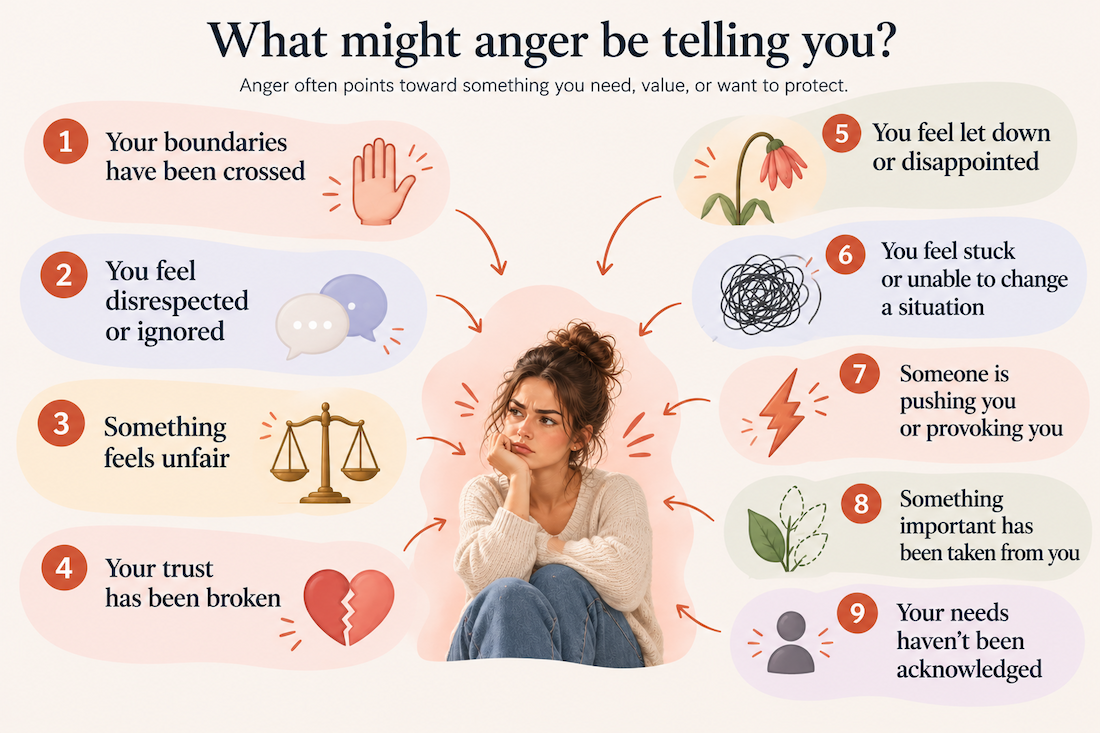
What might anger be telling you?
Anger often points toward something you need, value, or want to protect.
You might feel angry because:
- someone crossed one of your boundaries
- you feel disrespected or ignored
- something feels unfair
- someone broke your trust
- you feel let down or disappointed
- you feel stuck or unable to change a situation
- someone is pushing you or provoking you
- you feel that something important has been taken away from you
- your needs haven’t been acknowledged
Sometimes anger is connected to a more specific feeling. You may not simply be angry – you may feel betrayed, humiliated, resentful, frustrated, disrespected, or let down.
Finding the more specific emotion can help you understand what is really happening.
The different shades of anger
Anger can range from mild irritation to intense fury. The Emotion Wheel can help you find a word that describes your experience more precisely.
Frustrated
You feel blocked, stuck, or unable to get the result you want.
Let down
Something didn’t happen the way you hoped, or someone didn’t show up for you in the way you expected.
Disrespected
You feel that someone has ignored your feelings, needs, boundaries, or right to be treated with consideration.
Betrayed
Someone you trusted has broken that trust, leaving you feeling hurt, disappointed, or angry.
Resentful
You continue to carry anger about something that happened, especially when you feel that it was never properly addressed.
Humiliated
You feel embarrassed, exposed, or made to feel small, particularly in front of other people.
Provoked
Something someone says or does pushes your emotions toward anger and makes it difficult to stay calm.
Furious
Your anger feels extremely intense and difficult to ignore.
Withdrawn
Instead of expressing your anger, you pull away, stop communicating, or create distance from someone.
Critical or judgmental
You become focused on what is wrong with a person, situation, or yourself.
Recognizing the specific shade of anger can make it easier to understand what you need and how you want to respond.
How anger can feel
Anger can affect your thoughts, body, and behavior at the same time.
In the Mind
You may notice:
- repeatedly thinking about what happened
- focusing on what feels unfair
- thinking, “This isn’t right”
- becoming more critical of yourself or others
- replaying an argument in your head
- wanting to prove your point
- finding it difficult to consider another perspective
- feeling like you need to do something immediately
In the Body
Anger can create a strong physical response, such as:
- a faster heartbeat
- tense shoulders
- a clenched jaw
- tightness in your chest or stomach
- feeling hot or flushed
- faster or heavier breathing
- clenched fists
- restlessness
- a strong urge to move or act
In Behavior
You might:
- speak more loudly or sharply
- become impatient
- argue or interrupt
- withdraw from someone
- avoid communication
- send an angry message without thinking
- become defensive
- blame yourself or someone else
- feel the urge to get even
- shut down emotionally
Not all anger looks loud. Sometimes anger looks like silence, distance, or simply not wanting to engage.
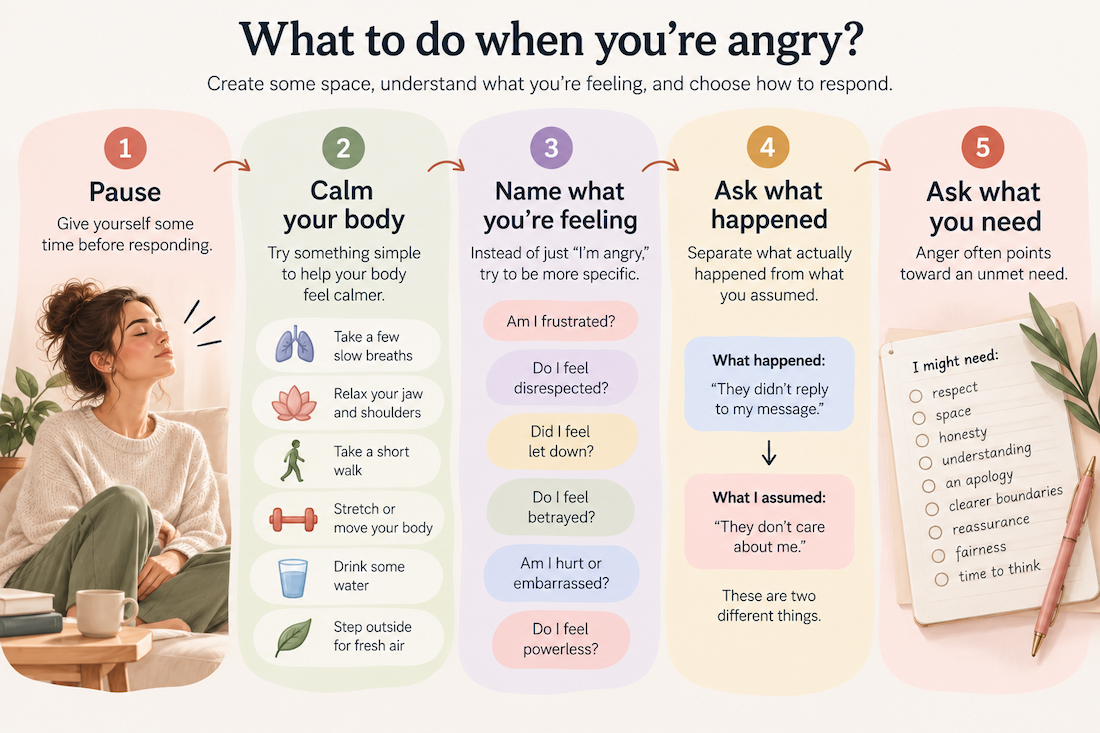
What to do when you’re angry
If you’re wondering how to deal with anger, start by giving yourself a moment to understand what you’re feeling before deciding how to respond. Learning how to control your anger doesn’t mean suppressing it. It means recognising your emotions and choosing what to do next.
Pause
When anger rises, you may feel an urge to argue, raise your voice, or send a message straight away. If you can, pause the conversation and give yourself a little space.
Even a few minutes away from the situation can help you think more clearly. If you need to step away, let the other person know you’ll come back to the conversation when you’re ready.
If you’re looking for how to control anger immediately, start by giving yourself time before you react. You don’t need to make a decision or find a solution while your emotions are running high.
Calm your body
Anger can show up physically: your heart may beat faster, your muscles may tense, or you may notice that you’re clenching your jaw or fists.
If you’re wondering how to calm down when angry, start with one or two simple actions that help your body relax.
Try something simple:
- Take a few slow, steady breaths.
- Breathe out a little more slowly than you breathe in.
- Relax your jaw, hands, and shoulders.
- Take a short walk or gently stretch.
- Step outside for some fresh air.
- Drink a glass of water and give yourself a moment away from the situation.
You don’t have to try everything. Choose what feels comfortable and notice whether your tension starts to ease.
Name what you’re feeling
Instead of simply thinking, “I’m angry,” try to be more specific.
Ask yourself:
Am I frustrated?
Do I feel disrespected?
Did I feel let down?
Do I feel betrayed?
Am I hurt or embarrassed?
Do I feel powerless?
The more precisely you can name an emotion, the easier it can become to understand it.
Ask what happened
Try asking yourself:
What exactly triggered my anger?
Then separate what actually happened from what you assumed about the situation.
For example:
What happened:
“They didn’t reply to my message.”
What I assumed:
“They don’t care about me.”
Those are two different things. Creating that distinction can give you more space to decide how you want to respond.
Ask what you need
Anger often points toward an unmet need.
You might need:
- respect
- space
- honesty
- understanding
- an apology
- clearer boundaries
- reassurance
- fairness
- time to think
Once you understand the need behind the emotion, you can decide what to do next.
How to express anger in a healthy way
You don’t have to hide your anger to communicate well.
Instead of reacting in the heat of the moment, try describing what happened, how it affected you, and what you need.
Instead of:
“You never listen to me.”
You could say:
“I felt ignored when I was talking and you were looking at your phone. I need your attention when we’re having an important conversation.”
This doesn’t mean your anger isn’t valid. It gives you a way to communicate it without allowing the emotion to control the conversation.
What can make anger worse?
Some responses can make anger stronger or keep it going for longer.
These can include:
- reacting immediately
- sending messages while extremely angry
- repeatedly replaying the situation
- assuming you know what another person intended
- holding everything inside until it builds up
- focusing only on who is to blame
- trying to win an argument rather than understand the situation
- ignoring your own needs and boundaries
Sometimes taking a pause isn’t avoiding the problem. It gives you the space to approach it more clearly.
How to work with anger over time
Managing anger over time starts with recognising your triggers, noticing early signs of frustration, and finding healthier ways to respond.
If you notice that anger comes up frequently, it can help to look for patterns in your reactions.
You might keep a simple record of:
What happened → What I felt → What I needed → How I responded
Over time, you may notice that certain situations repeatedly trigger similar feelings.
For example, you might find that you often feel angry when you don’t feel heard, when your plans change unexpectedly, or when you’ve taken on too much and feel overwhelmed.
If you’ve ever wondered, “Why am I so angry all the time?”, it may help to look at what’s happening before your anger appears. Ongoing stress, repeated frustration, lack of rest, or feeling unheard can all contribute to frequent anger.
What causes anger issues? There isn’t one single cause. Recurring anger can be associated with stress, difficult experiences, unmet needs, or challenges with managing strong emotions. Noticing when and why anger arises can be a useful first step towards changing how you respond.
Regular sleep, physical activity, breaks, clear boundaries, and honest communication can also help you manage everyday stress and respond more thoughtfully to difficult situations.
Final thought
Anger is not something you have to be ashamed of.
It can tell you that something matters to you, that a boundary may have been crossed, or that something in your life needs your attention.
You don’t have to act on every impulse that comes with anger. You can pause, explore what is underneath it, understand what you need, and then choose how you want to respond.
Your anger can be a signal. You get to decide what you do with it.
Not sure exactly what you’re feeling? Use the Emotion Wheel to explore the different shades of anger and find the word that fits your experience more closely.