
Physical Energy: 5 Ways to Feel Less Drained and Restore Your Energy
Have you ever reached the end of the day feeling completely exhausted, even though you can’t quite explain where all your energy went?
Sometimes it’s not just the amount of work we do that leaves us tired. It’s also how we approach everyday tasks: constantly switching between activities, trying to do too much at once, forgetting to take breaks, or leaving ourselves with no time to rest.
Physical energy is closely connected to our daily habits, including sleep, nutrition, physical activity, and routine. But the way we organise our time and focus our attention also makes a difference.
The good news is that you don’t have to change your entire lifestyle overnight. Small adjustments to your daily routine can help you use your energy more consciously and feel less overwhelmed.
Here are five ways to take better care of your physical energy.
1. Notice Where Your Energy Goes
Everyday activities require energy. Cooking, cleaning, working, running errands, looking after children, and even moving around the house all contribute to our physical workload.
But sometimes we make these activities more exhausting than they need to be.
For example, you might be preparing dinner when someone asks you for help, your phone rings, and another task comes to mind. You keep stopping what you’re doing and switching your attention between different things. By the end of the evening, you’ve been busy the whole time but may feel as though you’ve barely made any progress.
Constant interruptions and unnecessary switching between tasks can make the day feel much busier than it needs to be.
Try this:
For one day, pay attention to how you spend your time and energy.
- Which activities take up most of your day?
- How often do you switch between tasks?
- Do you regularly start something without finishing it?
- Which activities could be organised more efficiently?
The goal isn’t to make every minute productive. It’s to notice which habits leave you feeling scattered and where you could simplify your routine.
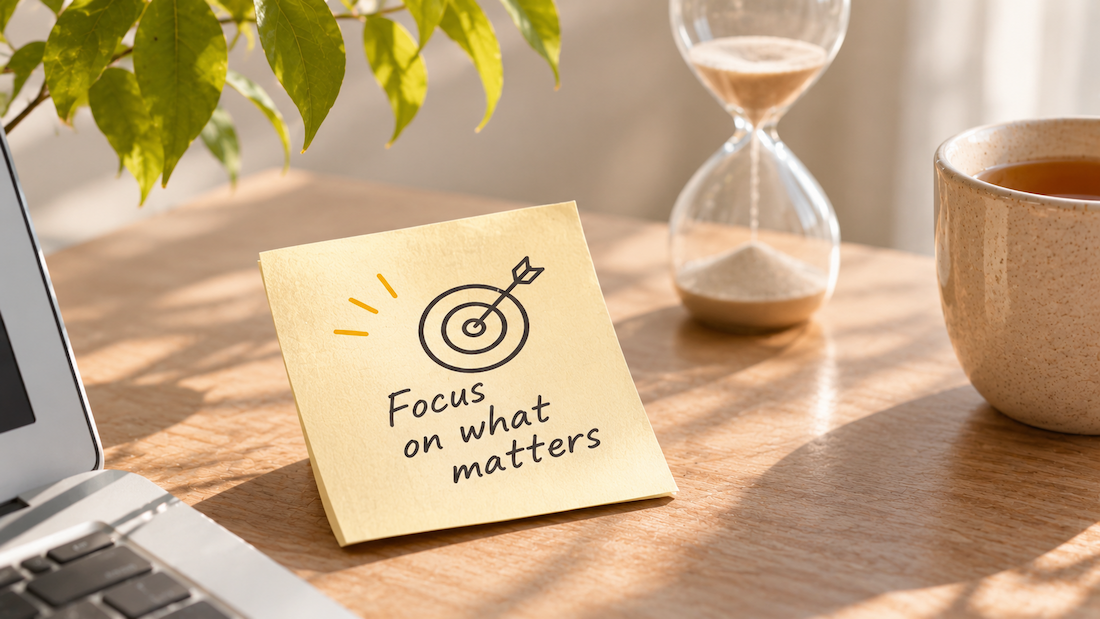
2. Focus on Actions That Bring Results
Being busy doesn’t necessarily mean making progress. You can spend an entire day completing small tasks and still feel that the most important things haven’t moved forward.
The key is to distinguish between activities that simply keep you occupied and actions that actually bring you closer to your goals.
The Pareto principle, often described as the 80/20 rule, offers a useful way to think about this: a relatively small number of actions can often produce a large share of the results.
Instead of trying to do everything, take a moment to identify what really matters. Which tasks will make the biggest difference? What deserves your time and effort most?
Try this:
Before choosing what to work on, ask yourself:
Which action will bring me closer to the result I want?
Then:
- Identify the outcome you want to achieve.
- Look at the tasks you need to complete.
- Choose the ones that will have the greatest impact.
- Give these priorities your time and energy before focusing on less important things.
You don’t have to do more to achieve better results. Often, it’s about putting your effort into the right things.
3. Plan Your Day Without Overloading It
A long to-do list can sometimes make you feel less productive, not more.
Imagine writing down ten things you need to do today. You complete six, but four remain unfinished. Instead of recognising what you’ve achieved, you might focus on everything you haven’t managed to do.
This can leave you feeling disappointed and make tomorrow’s list even longer.
A better approach is to plan realistically and start with less.
Try this simple planning method:
- At the beginning of the week, write down the tasks you need to complete.
- Decide which ones are the most important.
- Divide them between the days of the week.
- Choose just one or two main tasks for each day to begin with.
- Tick off each completed task and acknowledge your progress.
If you finish what you’ve planned and still have energy, you can always do something extra.
The important thing is to avoid treating every day as an opportunity to fit in as much as possible.
Start with a manageable workload. As you become more familiar with your routine, you can adjust the number of tasks based on how much energy and time you actually have.
4. Make Rest Part of Your Daily Routine
Many people plan their work, appointments, errands, and household responsibilities but leave rest until everything else is finished.
The problem is that there is almost always something else to do.
Rest is not something you should have to earn by completing your entire to-do list. It needs to be part of your routine, just like any other important activity.
It’s also worth remembering that not everything that looks like rest actually helps you recover.
For example, taking a child for a walk in the park might be enjoyable, but if you’re constantly pushing a stroller, watching the time, and making sure the child doesn’t wake up, it may not feel particularly restful.
Think about the activities that genuinely help you recharge.
Try this:
- Schedule some time for yourself, even if it’s just 20–30 minutes.
- Include activities you find relaxing, such as reading, taking a bath, listening to an audiobook, or going for a quiet walk.
- Make room for both physical rest and enjoyable activities.
- Avoid filling every free moment with another task.
You can even write rest into your planner. When it’s scheduled, it’s easier to treat it as something important rather than something you’ll do only when everything else is finished.
5. Build Daily Habits That Support Your Physical Energy
Your everyday routine has a direct influence on how you feel throughout the day.
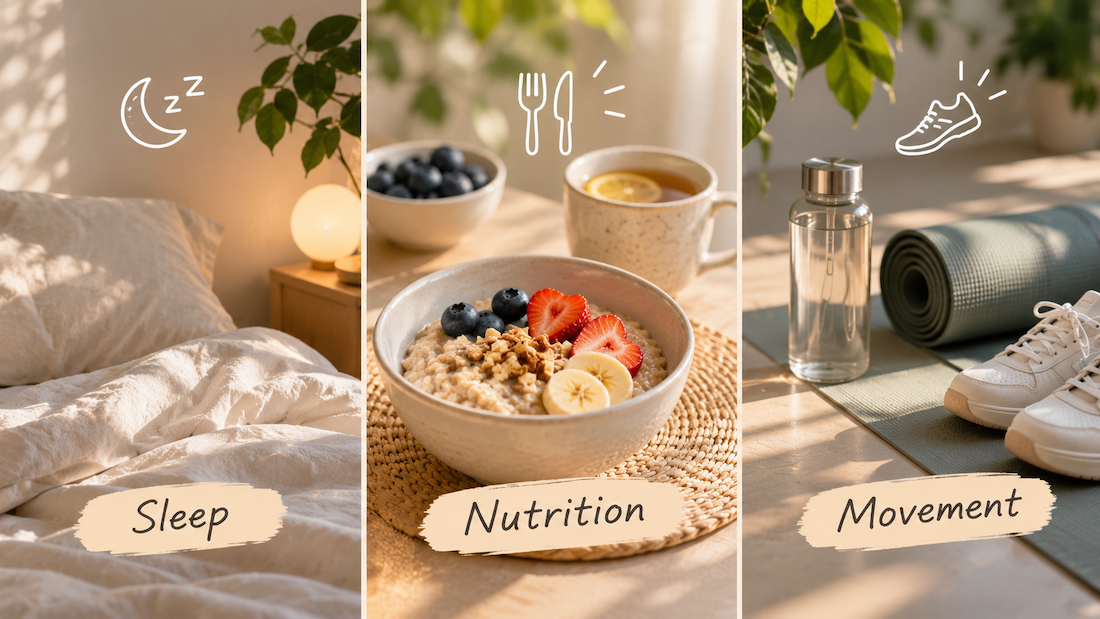
Three important areas to pay attention to are sleep, nutrition, and physical activity.
Pay attention to your sleep routine.
Try to maintain a relatively consistent bedtime and give yourself enough time to rest.
If you want to start going to bed earlier, make the change gradually rather than trying to shift your bedtime by several hours overnight. Moving it by 10–15 minutes at a time can make the adjustment feel more manageable.
It can also help to reduce screen time before bed and create a calmer evening routine.
Be mindful of what and when you eat.
Notice how different meals affect your energy and concentration.
Try to build regular, balanced meals into your day rather than relying on quick snacks whenever you feel tired. Include a variety of foods that provide protein, fibre, carbohydrates, and healthy fats.
You don’t need to follow a restrictive diet. Start by noticing your habits and making changes that are realistic and sustainable.
Find a comfortable balance of movement and activity.
Physical activity is part of maintaining your overall well-being. It doesn’t have to mean intense workouts or exhausting exercise sessions.
Walking, stretching, cycling, dancing, or any other movement you enjoy can be a good way to make physical activity part of your routine.
The key is to find a balance between activity and recovery, rather than constantly pushing yourself.
Final Thoughts
Physical energy isn’t only about how much sleep you get or how physically active you are. It’s also about how you organise your day, where you direct your attention, and whether you give yourself enough time to recover.
Constant multitasking, unrealistic to-do lists, and treating rest as an afterthought can make everyday life feel more exhausting than it needs to be.
Start by noticing where your energy goes. Choose one task to focus on, plan a manageable day, and make room for proper rest.
You don’t have to do more to feel more energised. Sometimes, the most helpful change is learning to do things with greater intention and giving yourself permission to slow down.