Frustrated: What It Feels Like and Why It Happens
What does frustrated mean in everyday life?
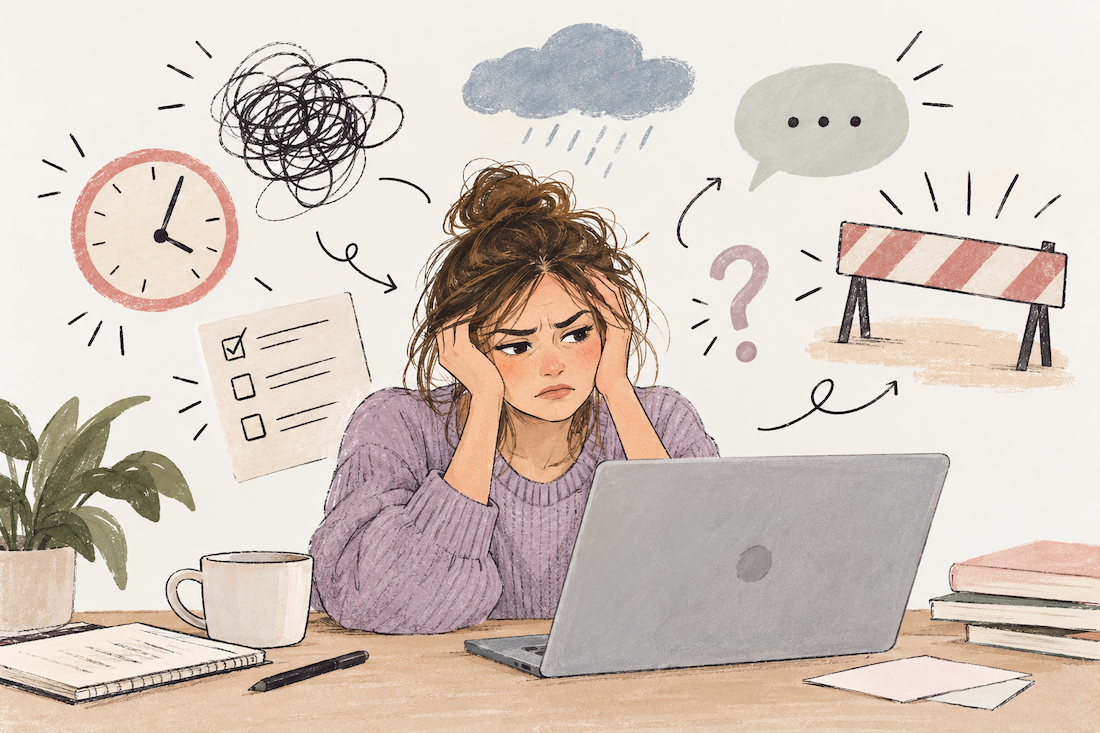
You know what you want to do, but something keeps getting in the way. You try to solve a problem, but nothing seems to work. Someone isn’t listening. A task takes much longer than expected. You keep making progress, only to run into another obstacle.
You might feel tense, impatient, irritated, or simply fed up.
This is often what feeling frustrated is like.
Frustration is the feeling that arises when something gets in the way of a goal, need, or outcome you care about. The obstacle might be external — such as another person’s behaviour, a difficult task, or circumstances you can’t control. Sometimes, however, frustration comes from the gap between what you expected and what is actually happening.
The frustrated definition can be summed up simply:
Frustration is the emotional response that occurs when something gets in the way of reaching a goal or getting an outcome you want.
Frustration doesn’t mean you’re unreasonable, impatient, or bad at handling difficult situations. It is a normal emotional response. What matters is how you respond to it.
Why do we feel frustrated?
Frustration often arises when something gets in the way of a goal or outcome you care about.
You may want to finish something, but don’t have enough time. You may want someone to understand you, but the conversation isn’t going anywhere. You may be putting effort into something without seeing the results you expected.
Common situations that can trigger frustration include:
- Not being able to control an important situation.
- Repeatedly trying without getting the result you want.
- Having expectations that aren’t met or don’t match reality.
- Dealing with delays or obstacles.
- Feeling misunderstood or ignored.
- Having too many demands at once.
- Depending on someone who isn’t cooperating or responding as expected.
- Making mistakes or struggling to learn something new.
- Feeling that your effort isn’t being recognised.
- Knowing what you want to do but not knowing how to get there.
Sometimes the trigger is small, but your reaction feels surprisingly strong.
That’s often because your emotional response isn’t shaped by the immediate situation alone. You may already be tired, stressed, disappointed, or dealing with several unresolved problems. When your emotional resources are already low, one more obstacle can feel like the final straw.
The frustration gap
A useful way to understand frustration is to look at the gap between what you expected and what actually happened.
For example:
- You expected to finish a project today → something went wrong → the deadline moved.
- You expected someone to help → they didn’t respond → you had to do everything yourself.
- You expected yourself to improve quickly → progress was slower → you started questioning your ability.
The wider the gap between expectation and reality, the easier it can be to become frustrated.
This doesn’t mean you should simply lower your expectations. It means noticing when your expectations may be adding another layer of pressure to an already difficult situation.
What does frustration feel like?
Frustration can affect your thoughts, body, emotions, and behaviour.
You don’t have to experience all of these signs. Your experience may also change depending on what caused the frustration and how long you’ve been dealing with it.
In the Mind
You might notice:
- Thinking, “Why is this so difficult?”
- Becoming impatient with yourself or other people.
- Focusing heavily on the problem.
- Replaying what went wrong.
- Finding it difficult to think about anything else.
- Feeling like you’re getting nowhere.
- Becoming more critical of yourself.
- Having thoughts such as “I can’t do this” or “What’s the point?”
- Wanting the situation to change immediately.
Frustration can narrow your attention. Instead of seeing several possible ways forward, your mind may become focused on the obstacle itself.
In the Body
Frustration can create physical tension or restlessness, such as:
- Tight muscles or clenched jaw.
- A feeling of pressure in your chest or body.
- Restlessness or difficulty sitting still.
- Increased heart rate.
- Feeling hot or tense.
- Shallow or faster breathing.
- Headaches or general physical tension.
- Feeling physically drained after dealing with a difficult situation.
These sensations aren’t unique to frustration and can also happen with stress, anger, or anxiety.
In Behavior
Frustration may show up as:
- Giving up on a task too quickly.
- Starting and stopping repeatedly.
- Procrastinating.
- Becoming short or impatient with other people.
- Complaining more than usual.
- Snapping at someone.
- Avoiding the situation altogether.
- Trying to solve the problem immediately without thinking it through.
- Taking your frustration out on someone who isn’t responsible for it.
Sometimes frustration makes you want to do something immediately. Other times, it makes you want to walk away completely.
Frustration vs. anger: what’s the difference?
Frustration and anger are closely connected, but they are not exactly the same.
Frustration often appears when something gets in the way of a goal or outcome you care about. You may feel stuck, impatient, irritated, or unable to move forward.
Anger is a broader emotional response that can arise when something feels wrong, unfair, threatening, or unacceptable. It can also appear when you feel that a goal, need, or boundary has been blocked or ignored.
For example:
You have been trying to fix a technical problem for two hours and still can’t find the solution → frustration.
Someone deliberately takes credit for your work → anger.
The two feelings can also happen at the same time. You might feel frustrated because you can’t solve a problem and angry because someone is making it harder.
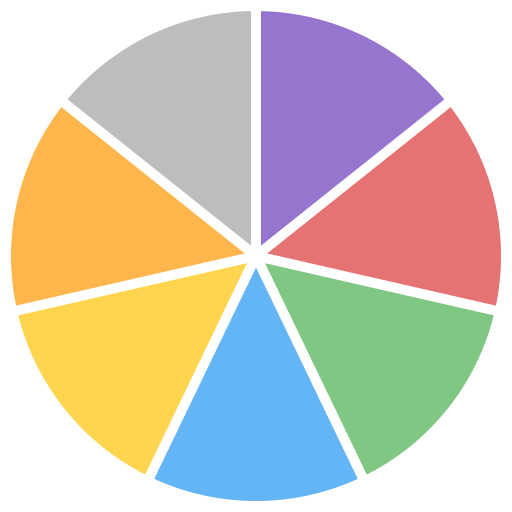
On Emotion Wheel, Frustrated is shown as a more specific feeling within Angry, reflecting how closely the two are related.
Ask yourself:
“Am I mainly frustrated because something is getting in my way, or angry because something feels wrong or unacceptable?”
The answer may point you towards a different next step.
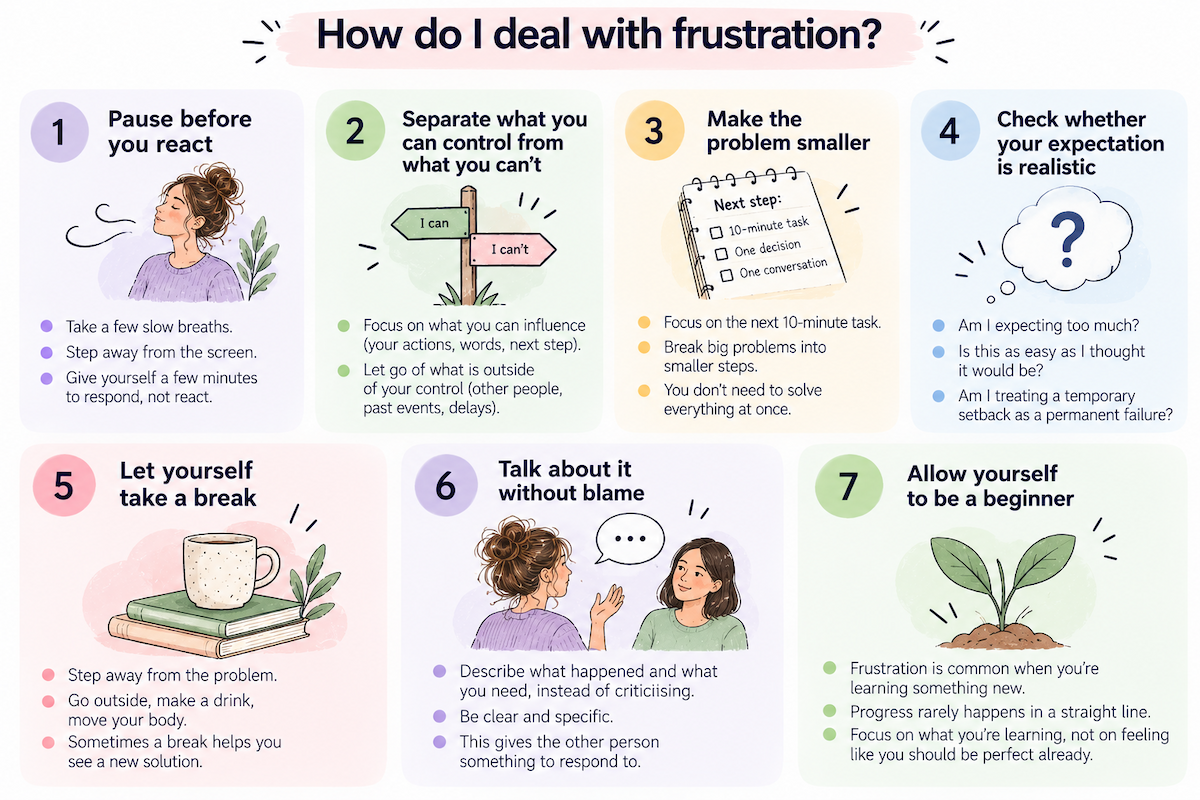
How do I deal with frustration?
If you’re asking how do I deal with frustration, start by resisting the urge to solve everything while you’re at the peak of the emotion.
You don’t have to make the feeling disappear. Instead, create enough space to understand what’s happening and choose what to do next.
1. Pause before you react
When you’re frustrated, your first impulse may be to send the message, quit the task, complain, or tell someone exactly what you think.
Sometimes that’s useful. Sometimes it creates another problem.
- Try taking a short pause first.
- Step away from the screen. Take a few slow breaths. Get some water. Walk around the room.
- Even a few minutes can give you enough distance to respond rather than react.
- Ask yourself: “What am I actually frustrated about?” Is it the problem itself, the delay, another person’s behaviour, or the fact that you feel you have no control?
2. Separate what you can control from what you can’t
Frustration often becomes stronger when you’re trying to control something that isn’t actually within your control.
You may not be able to make another person respond differently.
You may not be able to change a deadline.
You may not be able to make a process move faster.
But you can often control your next step.
Try dividing the situation into two lists:
I can influence:
- What I do next.
- What I say.
- Who I ask for help.
- How much time I give the problem.
- Whether I take a break.
I can’t control:
- Other people’s choices.
- Past events.
- Delays that are outside my control.
- Every possible outcome.
This simple distinction can turn frustration into something more manageable.
3. Make the problem smaller
Frustration can make a problem feel bigger than it actually is.
Instead of asking:
“How am I going to fix all of this?”
try:
“What is the next thing I can do?”
If you’re frustrated with a large project, identify the next 10-minute task.
If you’re stuck on a decision, write down the two options you’re actually choosing between.
If you’re having a difficult conversation, decide what you most want the other person to understand.
You don’t need to solve the whole situation before you take the next step.
4. Check whether your expectation is realistic
Sometimes the obstacle isn’t the only source of frustration. Your expectation may also be putting pressure on you.
Ask yourself:
- Did I expect this to be easier than it realistically is?
- Am I expecting myself to get it right immediately?
- Did I assume someone else would behave differently?
- Am I treating a temporary setback as a permanent failure?
- Am I expecting progress to happen faster than it normally does?
This isn’t about blaming yourself or lowering your standards.
It’s about checking whether your expectations match the situation you’re actually in.
5. Let yourself take a break
There is a difference between taking a break and giving up.
When you’ve been trying to solve the same problem for hours, continuing to push may not always be productive.
Go outside. Make a drink. Move your body. Do something completely unrelated for a while.
Sometimes your brain needs distance before it can see another solution.
A break can be especially useful when you notice that you’re making the same attempt repeatedly without getting anywhere.
6. Talk about it without turning frustration into blame
If another person is involved, frustration can quickly turn into criticism.
Instead of:
“You never listen to me.”
try describing what happened and what you need:
“I’ve tried explaining this a few times, and I feel like we’re not understanding each other. Can we slow down and try again?”
This doesn’t guarantee that the conversation will go perfectly. But it gives the other person something specific to respond to instead of putting them immediately on the defensive.
7. Allow yourself to be a beginner
Frustration is particularly common when you’re learning something new.
You may know what the finished result should look like, but your current skills aren’t there yet.
That gap can be uncomfortable.
Whether you’re learning a language, starting a new sport, developing a professional skill, or trying something creative, progress rarely happens in a straight line.
Instead of asking:
“Why am I still bad at this?”
try asking:
“What am I learning that I couldn’t do before?”
The second question gives you information you can actually use.
What can make frustration worse?
Some habits can make frustration build faster:
- Expecting immediate results.
- Trying to control things you cannot control.
- Criticising yourself for struggling.
- Comparing your progress with someone else’s.
- Continuing to push when you’re completely exhausted.
- Avoiding a problem until it becomes more difficult.
- Taking frustration out on other people.
- Treating one setback as proof that everything is going wrong.
- Believing that feeling frustrated means you should stop.
You don’t need to respond perfectly every time.
The important thing is to notice when frustration is taking over and create a little more space between the emotion and your reaction.
A simple way to work with frustration
The next time you feel frustrated, try this four-step process:
Pause → Name → Understand → Choose
1. Pause
Give yourself a moment before reacting.
2. Name
Put the feeling into words: I’m frustrated because…
3. Understand
Ask what is being blocked. What did you want to happen? What feels difficult right now?
4. Choose
Decide what would actually help: continue, change your approach, ask for help, take a break, communicate, or let something go.
You don’t have to remove the frustration before taking action.
Sometimes simply understanding what the frustration is pointing to is enough to make your next step clearer.
Keep track of recurring frustration
If you notice yourself feeling frustrated about the same things again and again, it can be useful to look for a pattern.
For a few days, try writing down:
What happened → What I expected → What I felt → What I needed → What I did
For example:
What happened: My project was delayed again.
What I expected: I thought I would be finished this week.
What I felt: Frustrated and disappointed.
What I needed: More clarity about the timeline.
What I did: Asked for a realistic deadline.
You may discover that your frustration isn’t really about one isolated event.
Perhaps you need clearer boundaries. More support. More realistic expectations. Better communication. More rest. Or a different way of approaching the problem.
The goal isn’t to analyse every emotion perfectly. It’s to learn enough about your patterns to respond more intentionally.
Final thought
Frustration often appears when you care about an outcome but can’t get there in the way you expected.
That can be uncomfortable. But frustration isn’t necessarily telling you to give up.
Sometimes it is asking you to pause. Sometimes you need a different approach. Sometimes you need to accept what you cannot change. And sometimes you simply need to give yourself more time.
You don’t have to stop feeling frustrated before you can move forward.
Start by understanding what is getting in your way, take the next manageable step, and give yourself permission to adjust the plan when reality doesn’t match your expectations. You can also use the Emotion Wheel to identify and explore what you’re feeling when it is difficult to put your emotions into words.
Progress doesn’t always mean getting exactly what you wanted. Sometimes it means finding a way to keep moving forward, even when things don’t go as planned.