
Fearful: What It Feels Like and Why It Happens
What does fearful mean in everyday life?
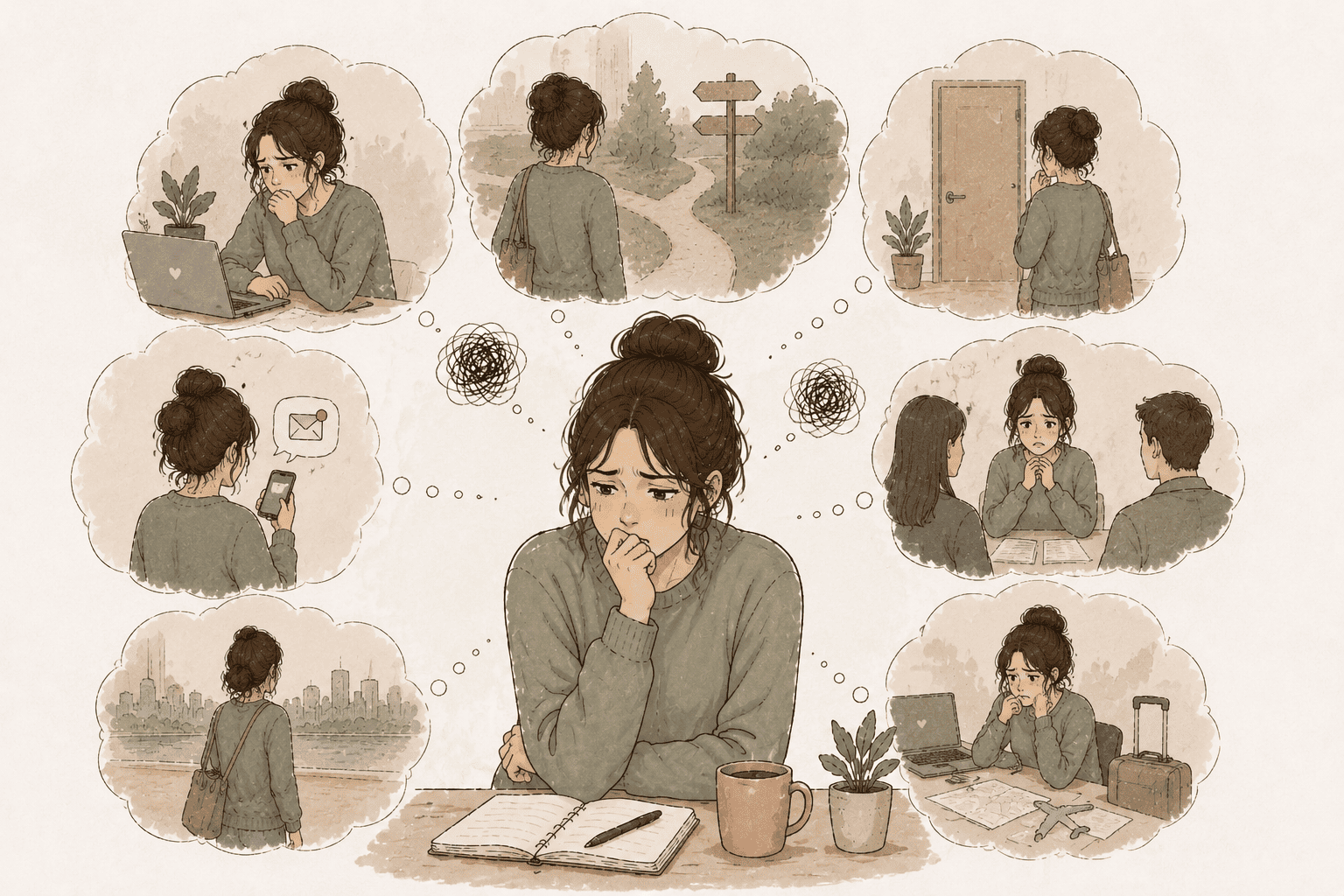
Feeling fearful is not always obvious. Sometimes it’s quiet.
It can look like overthinking a simple conversation, avoiding something you know you need to do, or feeling tense without fully understanding why. You may expect the worst, even when nothing bad has happened.
Fear usually shows up when something feels uncertain, stressful, unsafe, or emotionally overwhelming. Sometimes there’s a real reason for it. Sometimes your brain reacts to pressure, past experiences, or the possibility of getting hurt.
Being fearful doesn’t mean you’re weak. It often means your system is trying to protect you the best way it knows how.
What this emotion may be telling you
One way to define fear is as a natural response to uncertainty, danger, or the possibility of getting hurt.
Sometimes the danger is real. Other times, the feeling appears before anything actually happens. A difficult conversation, uncertainty about the future, rejection, failure, or the possibility of getting hurt can all trigger the same emotional response.
People often feel fearful around things that matter deeply. The more important something is, the stronger the fear of losing it, failing at it, or not being able to control the outcome may become.
In healthy amounts, fear can be useful. It helps people notice risks, stay alert, and protect themselves when something feels wrong. But it can become a problem when it starts controlling decisions, relationships, or everyday life.
What you may need
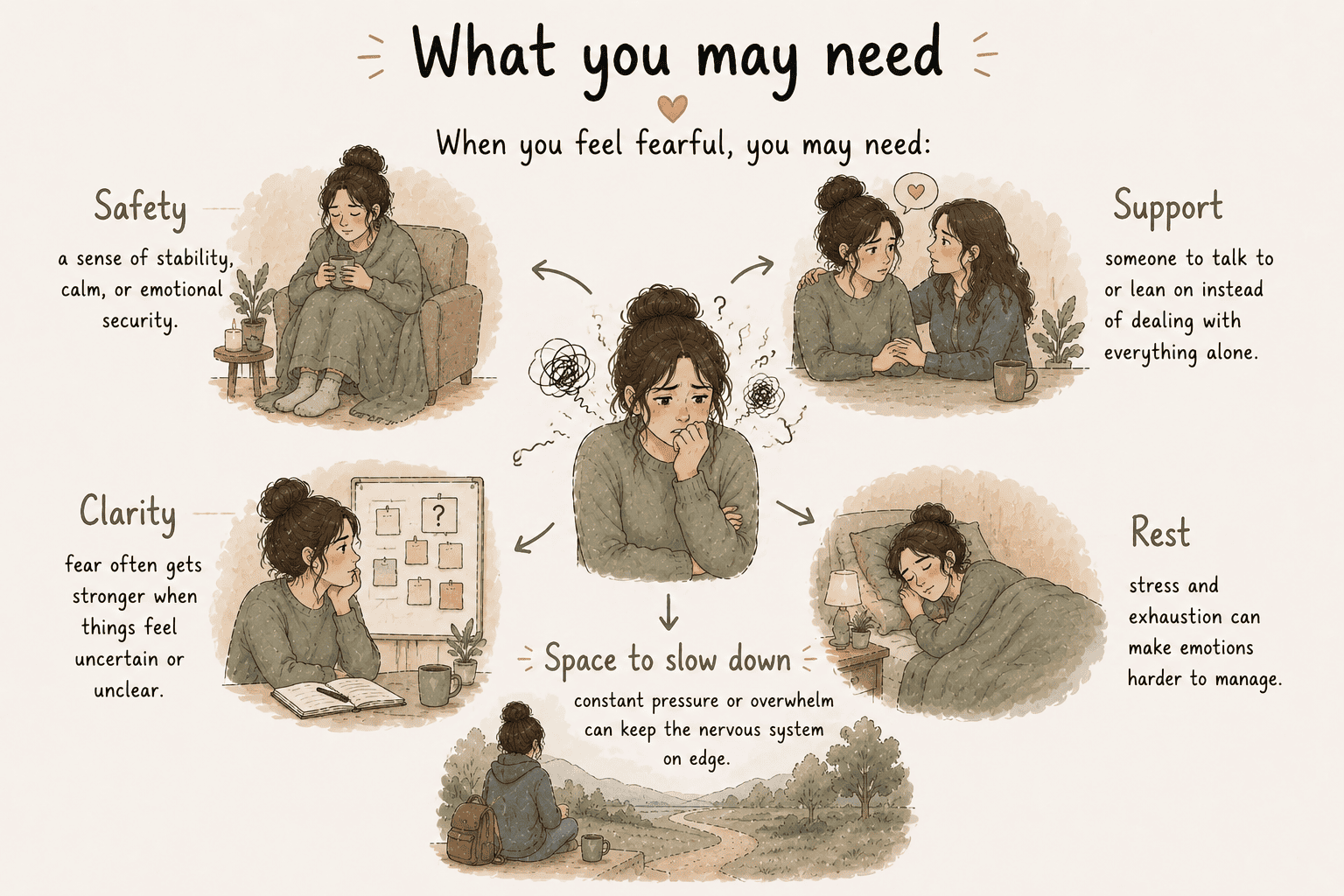
When you feel fearful, you may need:
- Safety – a sense of stability, calm, or emotional security.
- Support – someone to talk to or lean on instead of dealing with everything alone.
- Clarity – fear often gets stronger when things feel uncertain or unclear.
- Rest – stress and exhaustion can make emotions harder to manage.
- Space to slow down – constant pressure or overwhelm can keep the nervous system on edge.
How fear can show up
This emotion can affect thoughts, the body, and behavior all at once. Sometimes it is obvious. Other times it shows up as overthinking, tension, avoidance, or constantly feeling on edge.
In the Mind
Fear often pulls the mind toward possible problems, risks, or worst-case scenarios.
It may show up as:
- getting stuck in “what if” thoughts that are hard to turn off
- imagining worst-case scenarios before anything has happened
- feeling like something is unsafe, even without a clear reason
- second-guessing decisions that felt fine before
- overthinking small situations or conversations
- struggling to relax because the mind stays alert
In the Body
Fear often feels physical before it even becomes a clear thought.
It may show up as:
- a faster heartbeat
- tightness in the chest, stomach, or throat
- shallow breathing
- tense shoulders or jaw
- shaky hands or sweating
- feeling restless, jumpy, or unable to relax
- a sudden urge to leave, hide, or get away
- feeling overwhelmed with nervous energy or completely shut down
In Behavior
Fear can change the way people respond to situations, decisions, and other people.
It may show up as:
- avoiding situations that feel uncomfortable or uncertain
- putting things off because they feel overwhelming
- needing reassurance more often than usual
- becoming quiet, withdrawn, or extra careful
- freezing and not knowing what to do next
- overthinking or overplanning to feel more in control
- staying in preparation mode instead of taking action
- reacting defensively to small things
- avoiding conflict, change, or emotional risk
How to work with this emotion
Fear usually becomes stronger when people fight it, judge themselves for it, or try to ignore it completely.
The goal is not to never feel fear. The goal is learning how to feel safer while the emotion is present.
What Helps In The Moment
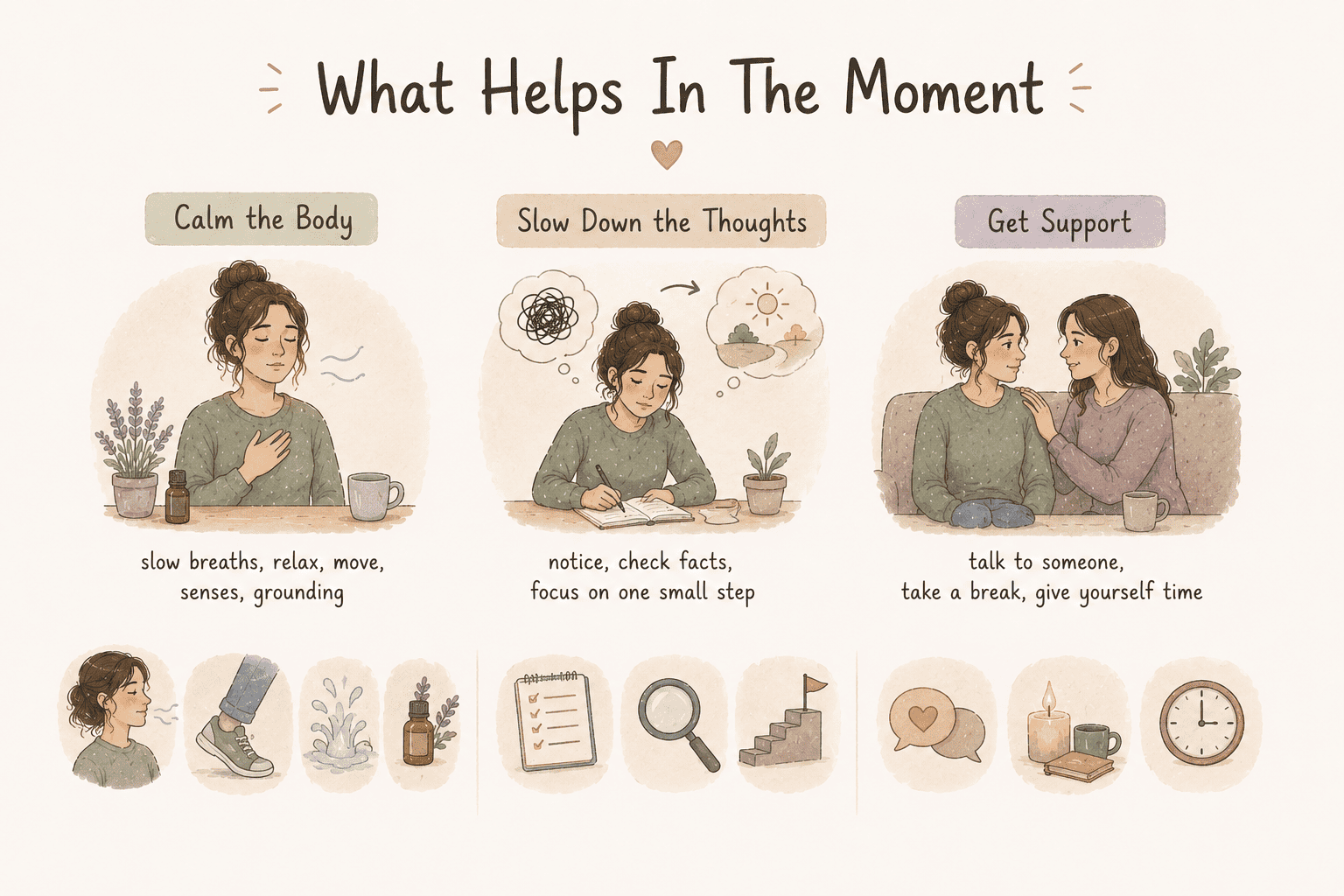
When fear feels strong, start with your body first. It is often easier to calm your body than to argue with your thoughts.
Calm the Body:
- take slower breaths, especially with a longer exhale
- relax your shoulders and unclench your jaw
- go for a short walk or move your body a little
- splash cold water on your face
- use calming scents like lavender, peppermint, or chamomile. You can explore scents for different emotions here
- try grounding yourself by noticing 5 things you can see, 4 things you can touch, and 3 things you can hear
- focus on physical sensations around you instead of getting pulled into fearful thoughts
Slow Down the Thoughts:
- name the feeling instead of fighting it, even saying “I feel afraid right now” can help
- ask yourself what is actually happening right now, not what might happen later
- separate real facts from worst-case assumptions
- focus on one small step instead of everything at once
- if the mind keeps imagining what could go wrong, ask yourself what could also go right
- try repeating calming affirmations. Explore positive affirmations here
Get Support:
- talk to someone who feels calming or safe
- take a break from noise, stress, or too much information
- give yourself time before reacting or making decisions
What helps long-term
Fear usually becomes easier to manage when life starts to feel more stable, safe, and supported.
Helpful things may include:
- getting enough sleep and rest
- reducing chronic stress where possible
- regular movement or exercise
- building routines that create more stability
- talking to someone supportive or working with a therapist
- understanding personal triggers and emotional patterns
- practicing calming techniques before emotions become intense
- taking small steps toward things that usually get avoided
- learning that discomfort does not always mean danger
Fear often becomes more manageable through experience, not pressure. Small moments of facing difficult situations and getting through them can slowly build confidence and make fear feel easier to handle.
What usually makes it worse
Fear often gets stronger when it is constantly avoided, ignored, or pushed away. Avoiding uncomfortable situations may bring short-term relief, but it can make the emotion grow over time.
Fear can also feel bigger when the mind stays stuck in worst-case thinking or when everything is carried alone for too long. Talking to someone safe and supportive can help make things feel more manageable.
How this emotion connects to others
Fear is often connected to anxiety, worry, uncertainty, and stress. Sometimes it can also appear together with shame, anger, sadness, or insecurity.
What looks like feeling fearful on the surface may also have another emotion underneath it.
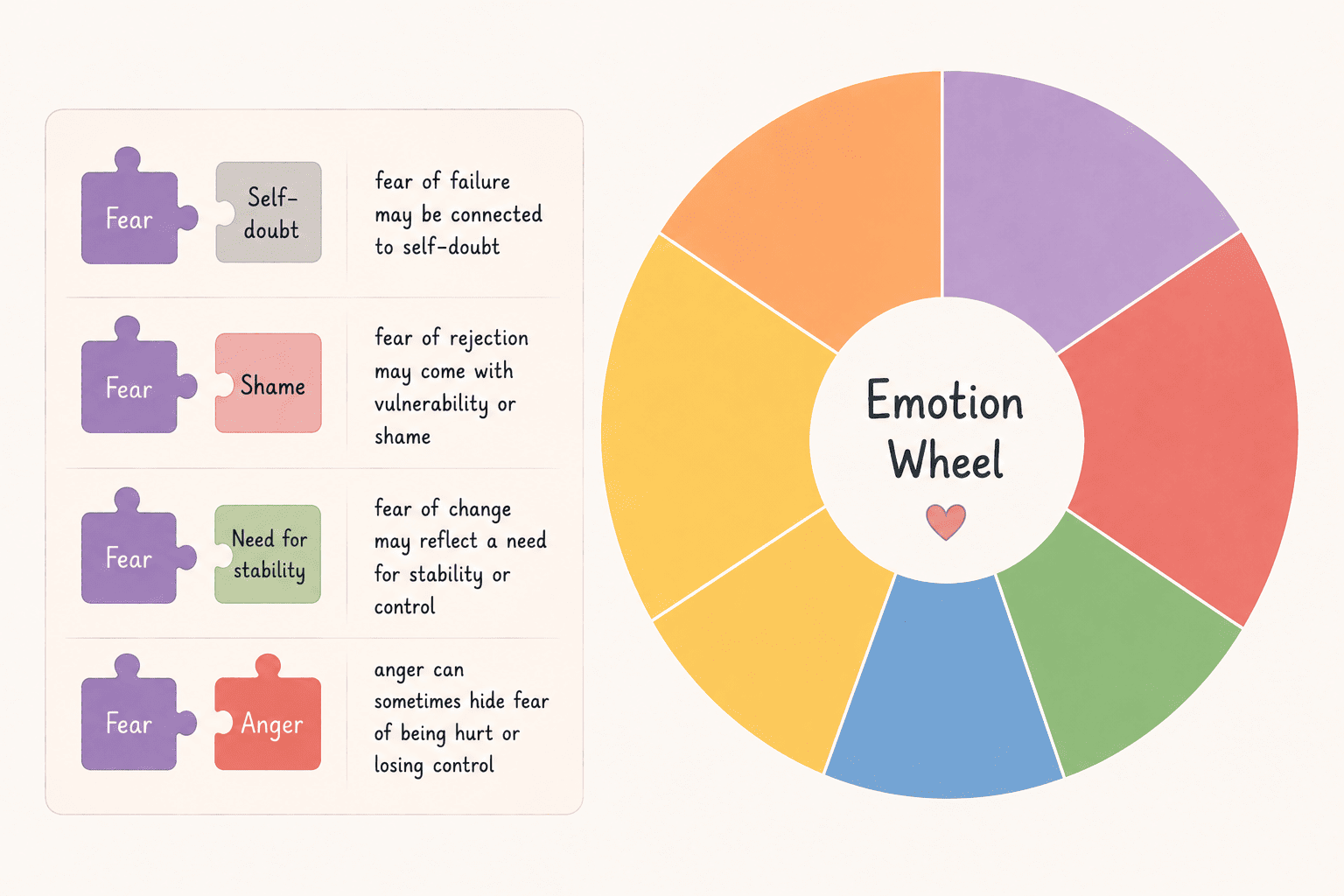
For example:
- fear of failure may be connected to self-doubt
- fear of rejection may come with vulnerability or shame
- fear of change may reflect a need for stability or control
- anger can sometimes hide fear of being hurt or losing control
Sometimes these reactions make more sense when you notice what is underneath them. Emotion Wheel can help you explore related emotions, put clearer words to what you are feeling, and notice patterns between emotions, thoughts, and behaviors.
Final thought
Fear is a natural part of being human.
It exists to protect you, prepare you, and help you respond to difficult situations. But it is not always a sign that danger is truly present. Sometimes this emotion appears when something feels uncertain, important, or emotionally difficult to face.
Sometimes fear is a sign that your mind and body need rest, support, safety, or reassurance.
You do not have to wait for the feeling to completely disappear before moving forward. Understanding it instead of only fighting it can make things feel less overwhelming over time.