
Emotion Wheel
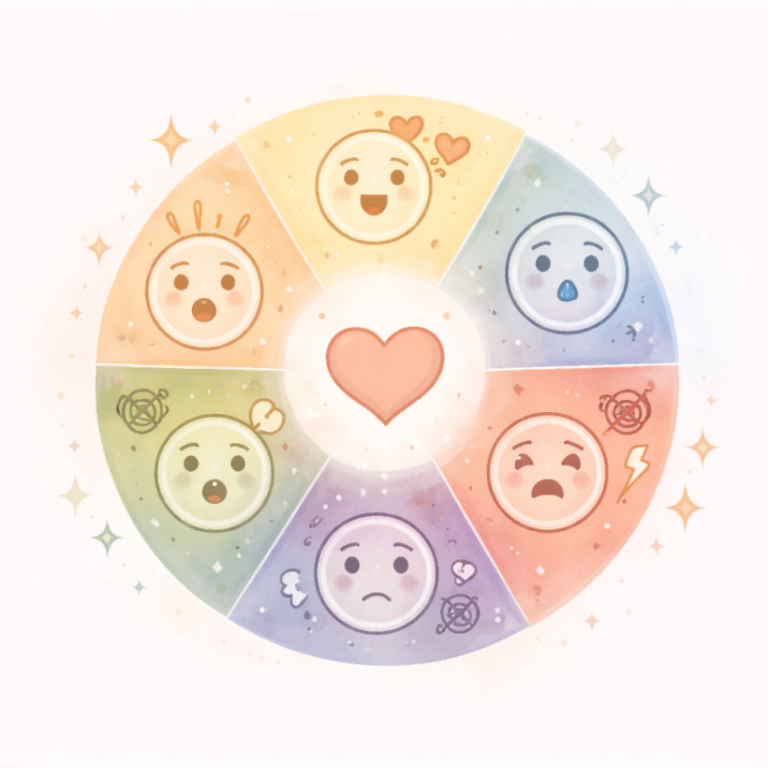
Emotion Wheel, also known as Feelings Wheel, is a simple tool for working with your emotions. It helps you slow down and understand what’s going on inside.
Sometimes an emotion can point to a crossed boundary or an unmet need. Noticing these signals can help you be more mindful of how you feel.
How to use Emotion Wheel
1. Take a moment to pause and check in with yourself – what are you feeling? What do you notice in your body?
2. Choose a core emotion from the center of the wheel (happy, sad, angry, etc.).
3. Move toward the edge of the wheel and pick the feeling that fits best.
4. Name the emotion without judging it – just let yourself notice it.
5. Read about this emotion and try to understand what it might be telling you (for example, about a crossed boundary or an unmet need).
6. If you’d like, try a few gentle practices to help yourself feel better
Why this can help
In today’s world, many of us deal with stress, overwhelm, tiredness, and loneliness – and that’s just a small part of what a person can feel. That’s why it’s so important to notice your emotions, accept them without judging yourself, and use different tools and practices, even very simple ones, to start feeling better.
Our interactive Emotion Wheel is made to help people work with their emotions. Sometimes it’s not easy to understand what you’re feeling, what’s behind that feeling, or how to help yourself in the moment.
What you’ll find inside

When Emotion Wheel can help
Who it’s for
How we’re different from the usual “images from the internet” and articles
Most emotion wheels online are just pictures, with little or no explanation of what each emotion means or what it might be trying to tell you.
We wanted to make something more helpful – an interactive tool that helps you understand your feelings better, see how they’re connected, and find simple, gentle ways to support yourself when you need it.
FAQ
- How does Emotion Wheel work?
Start with a basic emotion in the center and move outward to find more specific feelings. Select one to see an explanation, helpful insights, and simple ways to support yourself.
- Why is Emotion Wheel called “interactive”?
Because you don’t just look at it — you can turn the wheel by clicking and dragging it, click on emotions, explore them, and see explanations and simple ways to support yourself.
- How do I choose the right emotion on the wheel?
Start with the feeling that seems closest to what you’re experiencing right now. You can always explore others too.
- Can I use Emotion Wheel when I feel overwhelmed or stressed?
Yes. It can be especially helpful in moments of stress or overwhelm. If things feel too heavy, consider reaching out to a mental health professional.
- Is this a replacement for therapy?
No. Emotion Wheel is a gentle self-help tool that can help you understand yourself better, but it doesn’t replace professional support.
- How can aromatherapy help with emotions?
Scents can influence how you feel and help you calm down or feel more energized. For example, sandalwood or cedarwood can feel grounding, while grapefruit or rosemary can help you feel more awake and focused.