5 Types of Energy: What Drains You and Helps You Feel Better
Some days, you feel full of energy. On others, even simple tasks can feel exhausting. You might be physically tired, emotionally overwhelmed, mentally overloaded, or simply missing meaningful connection.
Understanding the different types of energy can help you notice what you need and take better care of yourself. Some days, you may need rest. On others, you might need connection, a change of pace, or time for yourself.
These five types of energy offer a simple way to understand how you’re feeling and what might help.
1. Physical Energy: Looking After Your Body
Physical energy affects how rested, active, and comfortable you feel in your body.
What can drain it:
- Not getting enough sleep
- Skipping meals or not drinking enough water
- Stress or illness
- Doing too much without taking breaks
What can help:
- Getting enough sleep and eating regularly
- Drinking water throughout the day
- Gentle movement, such as walking or stretching
- Taking breaks and giving yourself time to rest
You don’t have to push through every time you feel tired. Sometimes, rest is exactly what you need.

2. Emotional Energy: Understanding Your Feelings
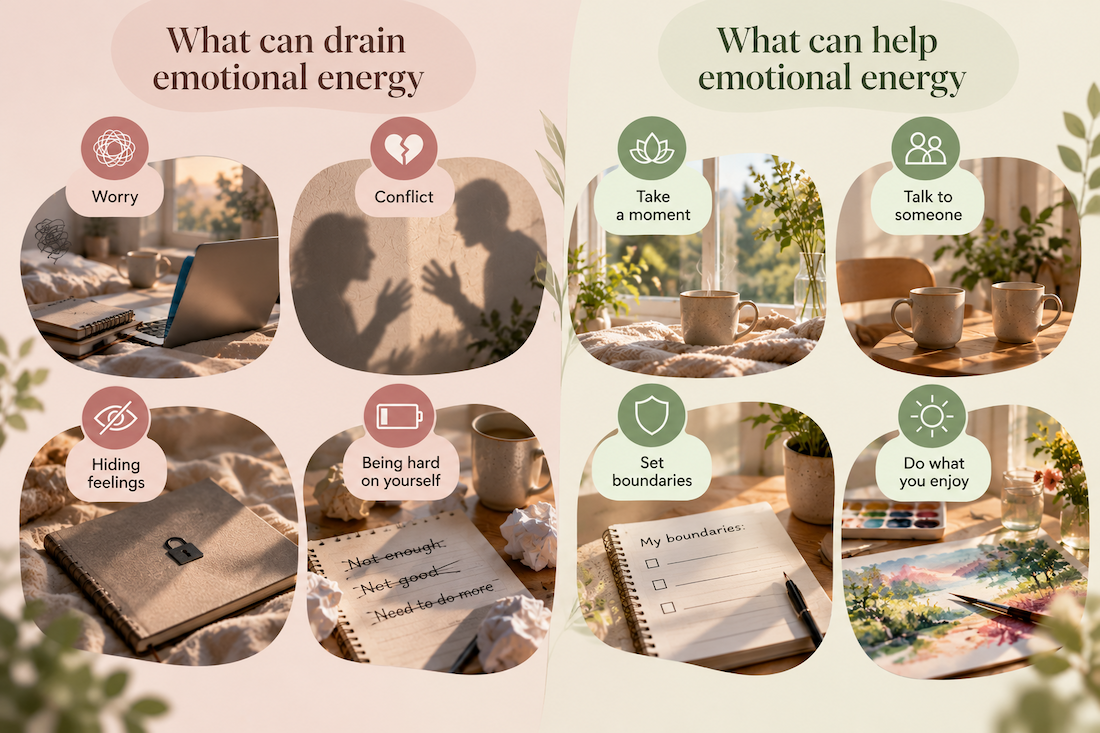
Your emotions affect how you experience everyday life. Worry, frustration, or keeping your feelings to yourself can leave you feeling drained.
What can drain it:
- Constant worrying or being hard on yourself
- Arguments or unresolved tension
- Trying to hide how you feel
- Feeling that you always have to be okay
What can help:
- Taking a moment to name what you’re feeling. If you’re not sure how you’re feeling, Emotion Wheel can help you find the words to describe your emotions.
- Talking to someone you trust
- Setting boundaries when something feels like too much
- Making time for things you enjoy
You don’t need to fix every feeling straight away. Sometimes, it helps just to be honest with yourself about how you’re doing.
3. Intellectual Energy: Giving Your Mind a Break
Intellectual energy is what you use to think, focus, learn, and make decisions.
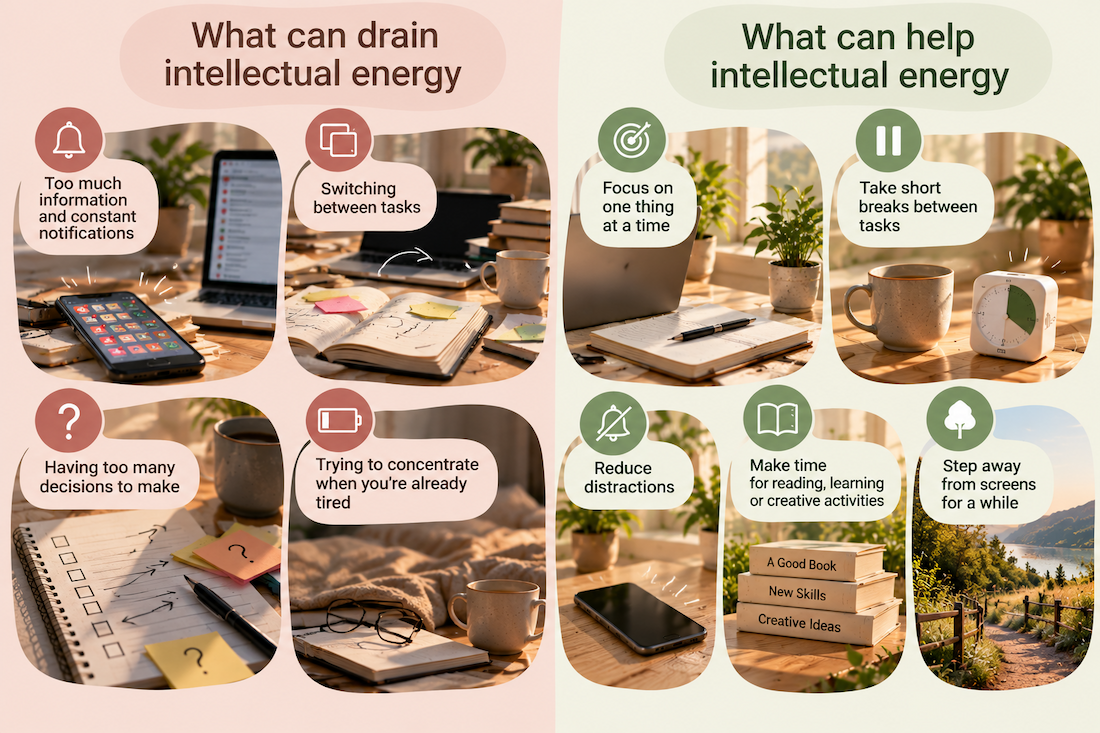
What can drain it:
- Too much information and constant notifications
- Switching between tasks
- Having too many decisions to make
- Trying to concentrate when you’re already tired
What can help:
- Focusing on one thing at a time
- Taking short breaks between tasks
- Reducing distractions
- Making time for reading, learning, or creative activities
- Stepping away from screens for a while
You don’t always need to do more to feel productive. Sometimes, a little less noise makes it easier to think.
4. Social Energy: Finding the Right Balance
The people around you can give you energy, but relationships can also leave you feeling exhausted. It often depends on how you feel around others and whether you have enough time for yourself.
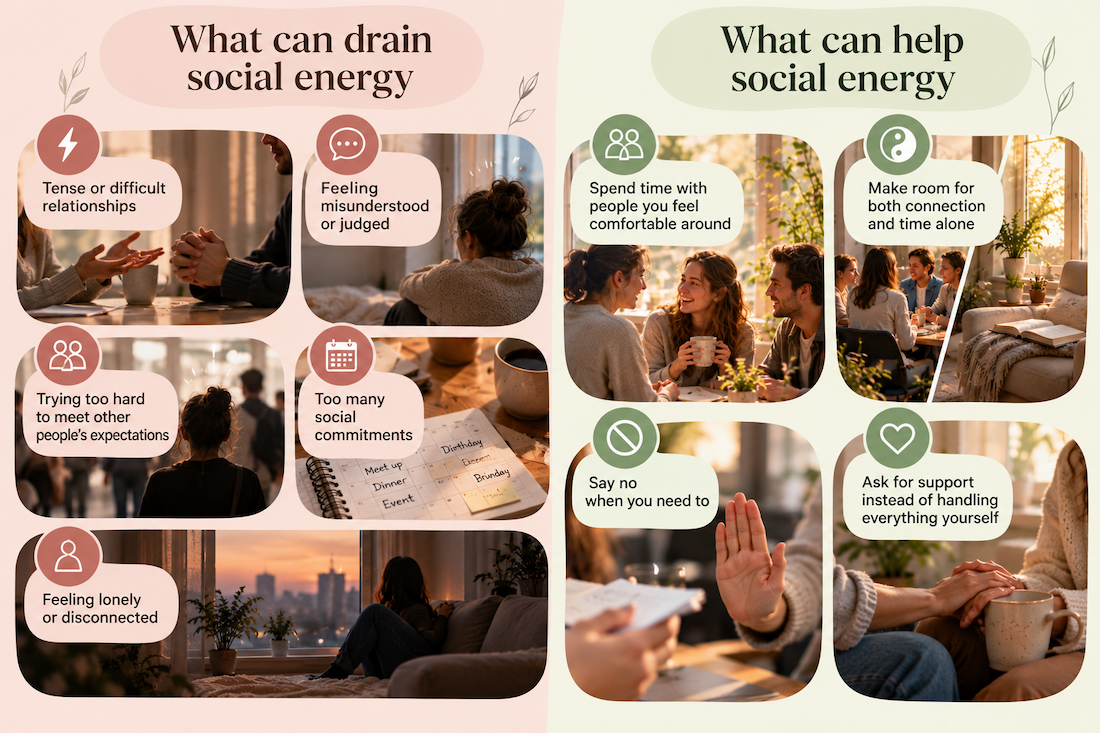
What can drain it:
- Tense or difficult relationships
- Feeling misunderstood or judged
- Trying too hard to meet other people’s expectations
- Too many social commitments
- Feeling lonely or disconnected
What can help:
- Spending time with people you feel comfortable around
- Making room for both connection and time alone
- Saying no when you need to
- Asking for support instead of handling everything yourself
Pay attention to how you feel after spending time with someone. Do you feel more like yourself, or do you feel worn out? It can be a useful clue about what you need.
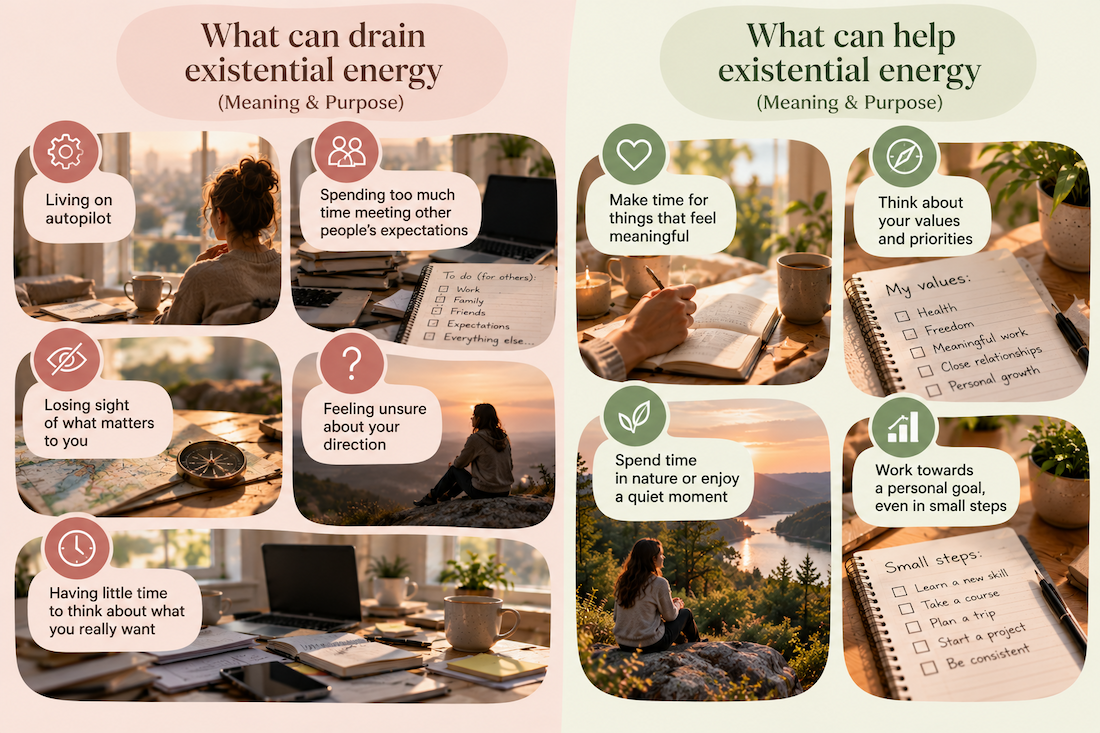
5. Existential Energy (Meaning & Purpose): Feeling Connected to Your Life
This type of energy is about feeling that your life reflects what matters to you. It can come from your values, personal goals, or a sense of meaning in what you do.
What can drain it:
- Living on autopilot
- Spending too much time meeting other people’s expectations
- Losing sight of what matters to you
- Feeling unsure about your direction
- Having little time to think about what you really want
What can help:
- Making time for things that feel meaningful
- Thinking about your values and priorities
- Spending time in nature or enjoying a quiet moment
- Working towards a personal goal, even in small steps
You don’t need to have everything figured out. You can start by asking yourself: What would I like to have more of in my life right now?
How These Five Types of Energy Work Together
The different types of energy are connected. When you’re not getting enough sleep, you may find it harder to manage your emotions. Difficult relationships can leave you mentally drained, while losing sight of what matters to you can affect how you feel overall.
That’s why it’s worth looking at the bigger picture rather than focusing on tiredness alone.
A Simple Energy Check-In
Think about how you’ve been feeling lately, what gives you energy, and what leaves you feeling drained. Rate each area from 0 to 10, where 0 means you’re feeling completely drained and 10 means you’re feeling good in that area.
- Physical energy: How rested and physically well do I feel?
- Emotional energy: How am I feeling emotionally? If you’re not sure, the Emotion Wheel might help.
- Intellectual energy: Do I have enough mental space to think and focus?
- Social energy: Do I feel connected to others while still having enough time for myself?
- Existential energy: Do I feel connected to what matters to me?
Look at your answers without judging yourself. You don’t need to work on everything at once. Notice which area could use a little more attention and choose one small, realistic step you can take today.
It might be getting an earlier night, talking to someone you trust, taking a walk, or making time for something you enjoy.
You don’t need to change everything at once. Start with what you need most.
Start With What You Need Today
Your energy naturally changes from day to day. The aim isn’t to feel energised all the time, but to notice what’s affecting you and respond to it.
Some days, you may need more rest. On others, a conversation, a change of pace, or time to think might help more.
Start small. Pay attention to how you’re feeling, and give yourself a little of what you’re missing.
If tiredness persists, gets worse, or starts affecting your daily life, it’s worth speaking to a healthcare professional.