
Emotion Wheel – Identify and Understand Your Feelings
Emotion Wheel, also known as Feelings Wheel, is a simple tool for understanding your inner state. It helps you slow down and understand what’s going on inside.
Sometimes what you’re experiencing can point to a crossed boundary or an unmet need. Noticing these signals can help you be more mindful of how you feel.
How to use Emotion Wheel
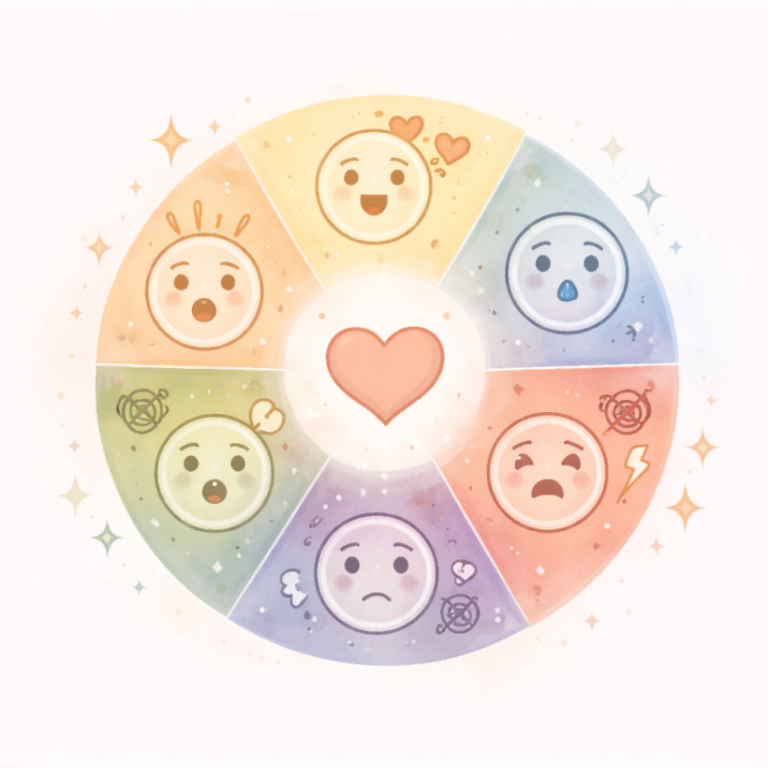
1. Take a moment to pause and check in with yourself – what are you feeling? What do you notice in your body?
2. Choose a core emotion from the center of the wheel (happy, sad, angry, etc.).
3. Move toward the edge of the feeling wheel and pick the nuance that fits best.
4. Name what you’re experiencing without judging it – just let yourself notice it.
5. Read about this emotion and try to understand what it might be telling you (for example, about a crossed boundary or an unmet need).
6. If you’d like, try a few gentle practices to support yourself, including affirmations that offer comfort and support.
P.S. You can also download a feelings wheel PDF to use anytime for reflection and emotional check-ins.
Why this can help
In today’s world, many of us deal with stress, overwhelm, tiredness, and loneliness, that’s just a small part of what a person can experience.
That’s why it’s important to notice your emotions, accept them without judging yourself, and use different tools and practices, even simple ones, to support yourself in everyday life. Affirmation cards, for instance, are a gentle way to find the right words when you need them most.
Our interactive wheel of emotions is designed to help you understand what you feel and develop emotional regulation skills in a simple, gentle way. Sometimes it’s not easy to recognize what’s going on inside, what’s behind a feeling, or how to support yourself in the moment.
What you’ll find inside

When Emotion Wheel can help
What Your Emotion May Be Telling You
Every feeling has a reason. When you use Emotion Wheel, you’re not just naming what’s going on, you’re starting to understand what may be behind it.
Your inner state can point to what matters to you, what feels off, or what you may need right now. Learning to notice these signals is a simple but powerful way to understand yourself better.
What Different Emotions May Mean
| Emotion | What it may be telling you | What you might need |
| Anger | Something feels unfair or a boundary has been crossed | Space, honesty, and a way to express what matters to you |
| Anxiety | You may be feeling uncertain or trying to stay prepared for what might happen next. | Grounding, reassurance, and one small thing you can focus on right now. |
| Sadness | You may be experiencing loss, disappointment, or distance from yourself or others | Rest, comfort, and space to process what you’re feeling |
| Guilt | Something may feel out of alignment with your values or expectations of yourself | Reflection, self-forgiveness, or the chance to make things right |
| Fear | You may be facing uncertainty, risk, or something unfamiliar | Safety, patience, and one small step forward |
| Loneliness | You may be needing connection or understanding | Support, meaningful connection, or self-compassion |
| Overwhelm | Too much is competing for your attention at once | Pause, simplicity, rest, and one manageable step at a time |
From Awareness to Action
Noticing an emotion is only the first step. What you do next matters just as much.
You might ask yourself:
- What is this feeling trying to tell me?
- What do I need right now?
- Is there something I can change, or do I just need to sit with this for a moment?
- What is one small step I can take today?
Sometimes the answer is practical. Sometimes it is emotional. Either way, paying attention is already a form of support.
This emotional wheel is for:
How we’re different from the usual “images from the internet” and articles
Most emotion wheels online are just pictures, with little or no explanation of what each state means or what it might be trying to tell you.
We wanted to make something more helpful – an interactive tool that helps you understand your feelings better, see how they’re connected, and find simple, gentle ways to support yourself when you need it.
Take care of yourself
This Feelings Wheel is designed to support you in reflection and mindfulness. It’s a helpful guide, but not a substitute for professional mental health support. If things get too heavy, consider reaching out to a therapist or counselor who can offer the care you deserve.
FAQ
- How does Emotion Wheel work?
Start with a basic emotion in the center and move outward to find more specific feelings. Select one to see an explanation, helpful insights, and simple ways to support yourself.
- Why is Emotion Wheel called “interactive”?
Because you don’t just look at it — you can turn the wheel by clicking and dragging it, click on emotions, explore them, and see explanations and simple ways to support yourself.
- How do I choose the right emotion on the wheel?
Start with the feeling that seems closest to what you’re experiencing right now. You can always explore others too.
- Is this a replacement for therapy?
No. Emotion Wheel is a gentle self-help tool that can help you understand yourself better, but it doesn’t replace professional support.
- Can I use Emotion Wheel when I feel overwhelmed or stressed?
Yes. It can be especially helpful in moments of stress or overwhelm. If things feel too heavy, consider reaching out to a mental health professional.
- How can aromatherapy support my emotional state?
Scents can influence how you feel and help you calm down or feel more energized. For example, sandalwood or cedarwood can feel grounding, while grapefruit or rosemary can help you feel more awake and focused.